Food sovereignty, a weapon to fight the food desert

Food sovereignty has been cropping up increasingly in a variety of conversations ranging across sustainability, off-grid living and indigenous rights. While we can often grasp the general idea, the roots of the philosophy must reach deep to ensure the Lakota can reclaim their food supply chains. It is about keeping the products and their yields local, bridging a feedback loop that sustains growth and reinvestment directly in the community.
To dismantle the Food Desert, we deploy a strategy built on ownership, not aid.
Charity manages the symptoms of isolation, but sovereignty cures the root disease. At the core of this movement is a fundamental philosophy: whoever feeds you controls you. For generations, reliance on outside supply chains and subsidized government commodities took the power of choice away from Pine Ridge, putting it into the government’s hands. The government subsidies also did not provide the needed nutrition and we now see widespread diet-related health problems. For instance, more than half of the population over 40 is affected by diabetes.
When One Spirit began, we started with food distribution because we saw an urgent need that had to be met immediately. As the years ticked by, we realized a hard truth: although we were saving lives, lasting change could only be made through a continuous and concerted effort. This does not mean we stop the pantries. The day-to-day situation remains dire, and holding the line is vital. But it requires a decisive evolution to our mindset.
The goal is to render the pantries obsolete.
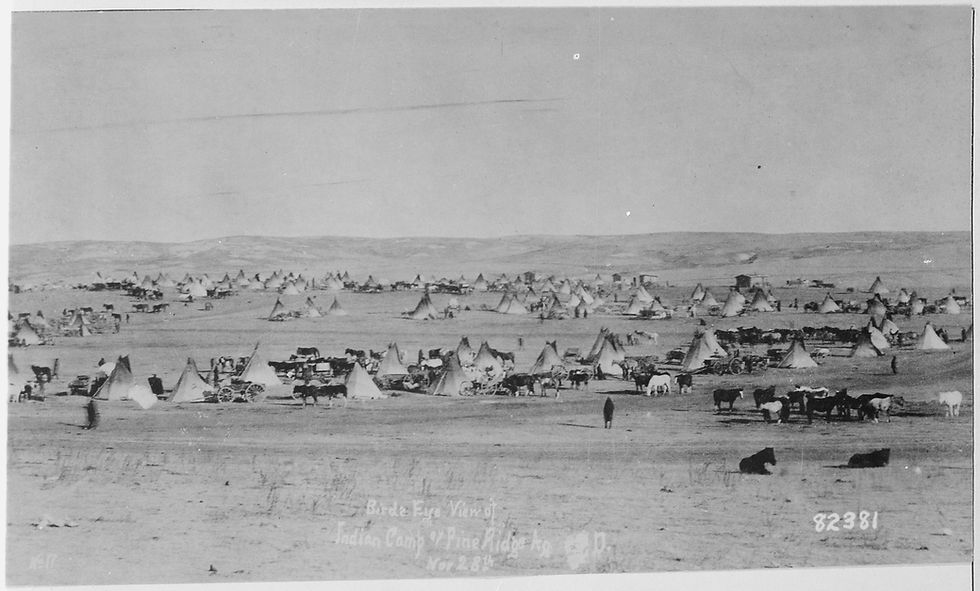
We are evolving from simply distributing food to producing it. This independence is not a new concept; it is a return to form. The Lakota possess a legacy of highly organized communal buffalo harvests, blueprints of profound ecological and logistical brilliance. Today, we channel that industrious spirit into our modern food systems.
Food sovereignty is a continuous effort, and we build this sovereign ecosystem through three interconnected programs:
The Pantries: Holding the Line
Before we harvest the crops of tomorrow, we must secure the community today. Our network of local food pantries bypasses broken supply chains to help those who need food the most see tomorrow’s sunrise. The pantries serve as the stabilizing force, giving the community the strength and breathing room required to build permanent, self-sustaining infrastructure.
The Bison: The Meat Processing Facility
We bring the buffalo back to the center of the Lakota diet and economy. By developing a Native-operated meat processing facility, we achieve a dual purpose: it supplies high-quality, lean protein directly back into our pantries, while also standing on its own as a profitable, Lakota-led business. Instead of shipping wealth and resources away, the Buffalo Meathouse closes the economic loop. It creates local jobs and ensures the community captures the full value of its own herds while sustaining a long-endangered relationship to the buffalo.
The Soil: Regenerative Gardens
Taking this evolution further, true independence grows from the ground up. Starting at the Allen Youth Center, we cultivate regenerative gardens that put the power of choice in the community’s hands. By enriching the earth and utilizing sustainable agriculture, we transform dormant plots into active, yielding micro-farms. These gardens and their Lakota custodians lay the tools of self-sufficiency directly into the hands of the next generation.
We cannot wait for the government’s hand. We build the infrastructure, we process the buffalo, and we enrich the soil. Through continuous effort and these three foundational pillars, Pine Ridge moves decisively toward a future where the Lakota feed the Lakota.