Tracking the past: Hunting in Lakota culture

The cold air bends the tall blades of grass as a frigid October gust crests the hill. The howling night winds are dwindling, leaving room for the hints of sunlight stretching from behind the pine hills. We're just a stone's throw away from Allen. The drive from the youth center was short, and yet the landscape is completely different here in Yellow Bear. What seemed like limitless plains and prairies suddenly morphed into hills thick with trees. It's as if the sky knew what was about to happen; the silence left by the departing howling winds helping clear our minds and catch our breath. The scope of a rifle became as still as the earth below it. The nervous shakes of a first hunt wore off as the elk walked into the crosshairs. For a moment, every wildflower and every tree held their breath. And as the rifle fired, the ground shook from its kick. A snap rippled through the leaves and the grass. All witnesses to this moment.
As the elk falls, only a murmur breaks the silence. It is not a joyous occasion. This is not a sport. It is a ceremonious occasion. The one who felled the elk steps forward. No one else is allowed to touch the animal before a final prayer is spoken to the animal. For dozens of generations and hundreds of years, the trees have watched the Lakota hunt in these forests. They've heard the prayers spoken to the animals, and the gratitude given to the animal for its sacrifice.
As the animal departs our world to head into the spirit world, many Lakota hunters have shared messages to be passed on to their lost relatives. Although each family and tribe has its own rites, they all converge around the same values.
We are all related
Hunting is not a sport to the Lakota, it is a sacrifice. A loss of a life from our world. Animals are not seen as beneath humans, they are respected as equals. A life that is born, that grazes, that walks, and that passes on the same land we do.
Flora and fauna have fed our ancestors, giving way to our existence. When this existence ends, our bodies return to the land, to the flora and fauna.
Hoops, circles and cycles
From very, very early on, the Lakota have been great listeners of nature. They've keenly observed the life of animals and the land around them. This has helped them learn and respect the wisdom of each life, each tree that calls this land home. The behavior of animals, the changes in the environment, bring clues of what's to come. Reading nature like a living calendar. This calendar contains the four ever-repeating seasons. The patterns are cyclical. The relationship between these lives and ours forms a circle. Black Elk saw his people and fellow Natives as bonded by a sacred hoop. As he puts it: "The Power of the World always works in circles, and everything tries to be round".
These circles don't just encompass all lives and their relationships. In one person's lifetime, this hoop crests once again. We grow up from childhood just to reach it again as our children and family's future grow through those same steps. The connection we build with the youth of today is a continuation of that sacred hoop. The knowledge, the stories, the values, the jokes, the successes, the mistakes, everything we share ensures our life, and our culture lives on.
This is central to Lakota culture. As an oral tradition, this bond is both fragile and incredibly powerful. The elders of today have many stories to be told. It may seem like a race against time, until we sit down and listen, and time begins to slow as we discover our elders' stories. Then time stops as we bask in the wealth of our ancestors' memories. Memories passed down through generations, as if bringing loved ones back to life. It's moments like these that are sacred.
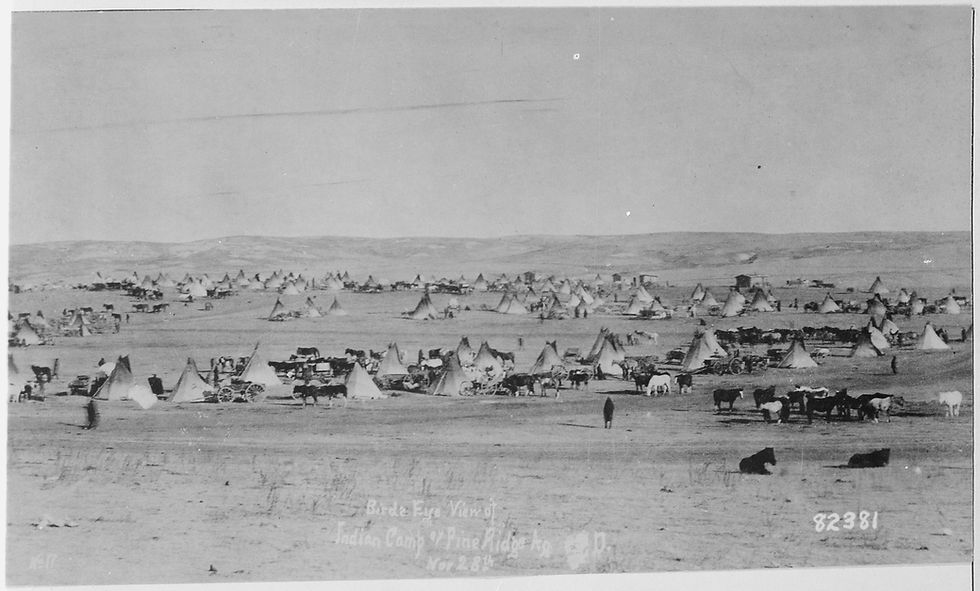
Travis Thunder Bull, an elder, veteran, and manager of the regenerative community gardens in Allen, is among those continuing this tradition. Over this weekend and several others, he will be leading a group of young men from the Allen Youth Center on an elk hunting expedition in the pine forests west of town. Joined by grandpas and fellow Lakota veterans, they will sleep in traditional teepees and gather around fire rings, leaving modern distractions behind to root themselves in the present.
For these boys, the woods become a classroom. They will learn animal track identification, wilderness survival, and how to read the changing climate that has made this year's wild chokecherries and turnips so scarce. When an elk is harvested, the meat will be respectfully processed by hand, just as it has been for generations. It will be dried for winter jerky and simmered in soups alongside the Lakota winter squash and corn the youth grew with their own hands in the community garden.
Through these shared campfires and lessons, Travis and the elders are ensuring the sacred hoop that has guided Lakota culture for centuries remains unbroken.